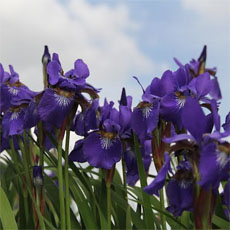
Tall Bearded Iris 'Slovak Prince'

Iris

Family
Iridaceae (eye-rid-AY-see-ee)
Genus
Iris (EYE-ris)
Synonym
Hybridized
Mego
Registered or introduced
2002
Height
24-36 in. (60-90 cm)
Spacing
12-15 in. (30-38 cm)
15-18 in. (38-45 cm)
18-24 in. (45-60 cm)
Hardiness
USDA Zone 3a: to -39.9 °C (-40 °F)
USDA Zone 3b: to -37.2 °C (-35 °F)
USDA Zone 4a: to -34.4 °C (-30 °F)
USDA Zone 4b: to -31.6 °C (-25 °F)
USDA Zone 5a: to -28.8 °C (-20 °F)
USDA Zone 5b: to -26.1 °C (-15 °F)
USDA Zone 6a: to -23.3 °C (-10 °F)
USDA Zone 6b: to -20.5 °C (-5 °F)
USDA Zone 7a: to -17.7 °C (0 °F)
USDA Zone 7b: to -14.9 °C (5 °F)
USDA Zone 8a: to -12.2 °C (10 °F)
USDA Zone 8b: to -9.4 °C (15 °F)
Sun Exposure
Full Sun
Danger
Parts of plant are poisonous if ingested
Handling plant may cause skin irritation or allergic reaction
Bloom Color
Gold (yellow-orange)
Blue-Violet
Lavender
White/Near White
Foliage
Herbaceous
Class
Tall Bearded (TB)
Bloom Time
Midseason (M)
Bloom Time
Bloom Time
Bloom Color
Bloom Time
Bloom Color
Bloom Color
Bloom Time
Other Details
Other details
Propagation Methods
By dividing rhizomes, tubers, corms or bulbs (including offsets)
Seed Collecting
N/A: plant does not set seed, flowers are sterile, or plants will not come true from seed
Soil pH requirements
6.1 to 6.5 (mildly acidic)
6.6 to 7.5 (neutral)
7.6 to 7.8 (mildly alkaline)
Patent Information
Non-patented
Awards (if applicable)
Honorable Mention
Award of Merit
John C. Wister Memorial Medal (TB)
Foliage Color
Bloom Characteristics
Flowers are fragrant
Water Requirements
Average Water Needs; Water regularly; do not overwater
Where to Grow
Fruit Shape
Fruit Size
Fruit Colors
Growing Habit
Days to Maturity
Seed Type
Disease Resistance
Leaf Type
Plant Size (check one)
Growing Habit
Growth Rate
Leaf Shape
Leaf Appearance
Degree to which the appearance is present
Leaf Texture (top)
Leaf Texture (bottom)
Leaf Color
Color of Leaf Margin
Leaf Substance
Number of Vein Pairs
Appearance of Margin
Margin Width
Flower Shape
Flower Fragrance
Does it set seed?
Flower Size
Flower Type
Blooming Habit
Foliage Habit
Color Patterns
Awards (if applicable)
Seed Type
Growth Habit
Days to Maturity
Bloom Shape
Other Details
Pruning Instructions
Kernel Color
Flower Shape
Flower Habit
Bloom Size
Color Pattern
Bloom Shape
Pruning Groups
Bloom Diameter
Heat (Pungency)
Fruit Shape
Fruit Size
Fruit Color
Disease Resistance
Seed Type
Flower Size
Size/Type
Flower Characteristics
Leaf Shape/Type
Leaf Texture
Leaf Color
Propagation
Pollination
Bearing Habit
Rootstock Vigor
Disease Resistance
Fruit Usage
Classification
Regional

This plant is said to grow outdoors in the following regions:

Tucson, Arizona

Denver, Colorado

Gainesville, Georgia

Cherryvale, Kansas

Shawnee Mission, Kansas

Wichita, Kansas

Belleville, Michigan

Robertsville, Missouri

Shepherd, Montana

Greenville, Ohio

Lawton, Oklahoma

Grants Pass, Oregon

Greeneville, Tennessee

Winnsboro, Texas

Pleasant Grove, Utah

Madison, Wisconsin

show all

Featured Videos

Gardener's Notes:

3
positives
1
neutral
0
negative
Sort By:
Sort By:
C
Greenville , OH (Zone 5b) | September 2023 | positive

This iris grows in a beautiful clump. It's very eye catching in the garden and grows very well.

R
(Zone 1) | November 2015 | positive

Parentage: Edith Wolford x Queen in Calico

M
Oro Valley, AZ (Zone 9a) | October 2006 | positive

Nice looking iris and a good grower for me too.

J
J
Belfield, ND (Zone 4a) | March 2006 | neutral

American Iris Society Awards: Honorable Mention 2005; Award of Merit 2007; John C. Wister Memorial Medal 2009

Featured
Coleus'Tapestry'
(Solenostemon scutellarioides)
Oblique-banded Leafroller Moth
(Choristoneura rosaceana)
Pacific Black Duck
(Anas superciliosa)
Featured
Coleus'Tapestry'
(Solenostemon scutellarioides)
Oblique-banded Leafroller Moth
(Choristoneura rosaceana)
Pacific Black Duck
(Anas superciliosa)